

SRHR Emergency Response in Sri Lanka
Protecting access to essential sexual and reproductive health services when communities need them most.
What Is SRHR Emergency Response?
Sexual and Reproductive Health and Rights (SRHR) emergency response refers to the provision of essential sexual and reproductive health information, services, supplies and support during humanitarian emergencies such as floods, landslides, cyclones, pandemics, displacement and other crises.
During an emergency, health systems and essential services can become disrupted. People may be displaced from their homes, healthcare facilities may become difficult to access, and privacy, sanitation and personal safety can be compromised. These conditions can increase risks related to unintended pregnancies, complications during pregnancy and childbirth, sexually transmitted infections, sexual and gender-based violence and other sexual and reproductive health concerns.
Emergency SRHR response therefore aims to ensure that essential services and information remain available when communities need them most.
FPA Sri Lanka's emergency preparedness and response work is guided by the Minimum Initial Service Package (MISP) for Sexual and Reproductive Health in Emergencies — a set of priority, lifesaving interventions designed to address critical reproductive health needs at the onset of a humanitarian crisis.
Emergency response is not only about responding after a disaster occurs. It is also about preparedness, coordination, training and ensuring that systems and supplies are ready before a crisis happens.
Why Sexual and Reproductive Health Matters During Emergencies
During a crisis, sexual and reproductive health needs do not stop.
Pregnancy, childbirth, menstruation, contraception, STI prevention and treatment, HIV services, protection from sexual violence and access to appropriate counselling and referrals remain important even when communities are affected by disasters or displacement.
Emergencies can make these needs more difficult to address. People may lose access to regular healthcare services, medicines and contraception, while overcrowded shelters and disrupted sanitation can create additional health and safety concerns. Women, girls, adolescents, persons with disabilities and other groups facing existing barriers may experience particular challenges in accessing appropriate care.
FPA Sri Lanka's humanitarian work recognises that SRHR should be integrated into emergency preparedness and response rather than treated as an issue that can wait until the immediate crisis has passed. FPA has worked to strengthen the capacity of healthcare workers and first responders, promote MISP implementation and support the integration of SRH into disaster-management planning.
Your support can help ensure that essential sexual and reproductive health needs remain visible and addressed when communities are facing crisis.
FPA Sri Lanka's Emergency SRHR Work
SPRINT – Sexual and Reproductive Health in Humanitarian Settings
FPA Sri Lanka has a longstanding commitment to integrating sexual and reproductive health into humanitarian preparedness and response. This work has been strengthened through the SPRINT Initiative, which focuses on ensuring that essential SRH services are available during crisis and post-crisis situations.
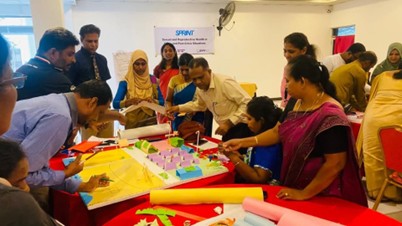
FPA Sri Lanka's SPRINT IV – Sexual and Reproductive Health in Humanitarian Settings programme has focused on strengthening preparedness, response capacity and coordination. Activities have included community engagement, emergency preparedness planning, prepositioning essential medical and dignity supplies, training healthcare personnel and first responders on the Minimum Initial Service Package (MISP), simulation exercises, youth engagement and policy-level advocacy.
FPA Sri Lanka has also responded to communities affected by disasters through practical humanitarian interventions. In its response following Cyclone Ditwah, FPA reported the distribution of dignity kits, maternity kits, adolescent kits and transgender kits, alongside mobile clinics and community awareness activities. FPA has worked with the Ministry of Health, the Family Health Bureau and humanitarian partners to help ensure that essential SRHR services reach communities affected by emergencies.
FPA's emergency SRHR work builds on years of experience in humanitarian preparedness, including training first responders and healthcare personnel on MISP, strengthening coordination mechanisms and supporting the integration of SRH into disaster-management systems.
When emergencies happen, preparedness matters. Your donation can help strengthen the capacity to respond when communities need essential SRHR services most.
How Emergency SRHR Support Helps Communities
Essential SRH Services
Help maintain access to essential sexual and reproductive health services when normal healthcare access is disrupted.
Dignity & Maternity Kits
Support the availability of essential supplies for people affected by displacement, emergencies and disruption of normal services.
Maternal & Newborn Health
Help strengthen emergency preparedness and response for pregnant women, mothers and newborns during crisis situations.
Family Planning & Contraception
Support access to family planning information, counselling and services during emergencies, when regular services may be disrupted.
STI & HIV Prevention
Support prevention, information, testing, treatment referrals and other measures addressing HIV and sexually transmitted infections during emergencies.
Protection from Sexual Violence
Support awareness, referral pathways and appropriate responses for survivors of sexual and gender-based violence in humanitarian settings.
Mobile Clinics & Outreach
Help bring essential health information, services and referrals closer to communities affected by disasters and displacement.
Preparedness & Training
Support training, simulation exercises and preparedness activities that help healthcare workers, first responders and communities respond more effectively during emergencies.
Youth & Community Engagement
Support young people and communities to participate in emergency preparedness and access accurate sexual and reproductive health information.
Donate to Support Emergency SRHR Response
Help Keep Essential SRHR Services Accessible During Emergencies
Why Support FPA Sri Lanka?
When you support FPA Sri Lanka, you are contributing to an organisation with established experience in sexual and reproductive health and a commitment to ensuring that essential SRHR needs are not overlooked during humanitarian crises.
More Than 70 Years of Experience
Established in 1953, FPA Sri Lanka has more than seven decades of experience working in family planning, sexual and reproductive health and rights, health education, service delivery and advocacy.
Specialist SRHR Expertise
FPA Sri Lanka's work covers areas including family planning and contraception, maternal health, STI/HIV services, counselling, gender-based violence and sexual and reproductive health education. This expertise also informs its humanitarian SRHR work.
Humanitarian Preparedness & Response
FPA Sri Lanka has developed experience in preparing for and responding to emergencies through the SPRINT programme, MISP training, simulation exercises, emergency planning, community engagement and the provision of essential supplies and services.
Locally Rooted, Globally Connected
FPA Sri Lanka is a Member Association of the International Planned Parenthood Federation (IPPF), connecting its local experience with a wider global movement working on sexual and reproductive health and rights. FPA Sri Lanka has been an IPPF Member Association since 1954.
Partnerships Matter
Emergency SRHR response requires coordination. FPA Sri Lanka has worked with government institutions, UN agencies, humanitarian organisations and other partners to strengthen preparedness and deliver services during emergencies.
A Commitment to Inclusion
FPA Sri Lanka's stated values include diversity, inclusion, equality and non-discrimination. Its humanitarian preparedness work has also included attention to groups such as persons with disabilities, young people and other communities that may face additional barriers during emergencies.